
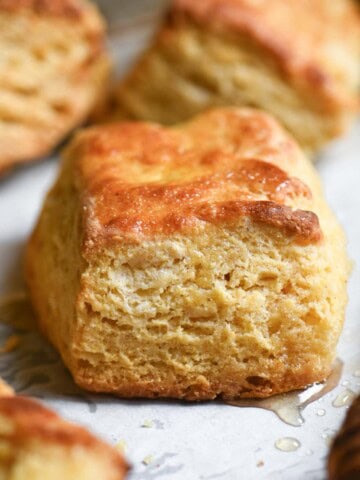
These Cake Flour Biscuits are tender, buttery, and rise beautifully. After testing different flour combos, this recipe consistently delivers bakery-style layers without the dense, heavy texture. The secret to their soft crumb and lift is simple: cake flour, which creates a softer, lighter bite.

After seven years, I realized that I didn't have a plain ol' biscuit recipe on here (crazy, right?). Sure, I have my savory cheddar biscuits (which are equally delish), but I wanted a go-to everyday biscuit recipe that pairs with absolutely everything.
So, I set out to create a recipe that checks all the biscuit boxes: flaky, buttery, fluffy, and golden. Cake flour makes a big difference here. It's a softer flour, which means the biscuits stay light and tender instead of dense or chewy. If you've ever had a biscuit that felt heavy, cake flour can help.
Jump to:
Key ingredient
Cake flour contains less protein compared to other flours, which means less gluten in the dough. Gluten gives baked goods structure, which isn't a bad thing! Here, we're aiming for a lighter biscuit, so the lower protein helps keep these biscuits soft and fluffy.
Cake flour is easy to find. It's usually found near all-purpose flour at the grocery store. I use Swans Down cake flour.
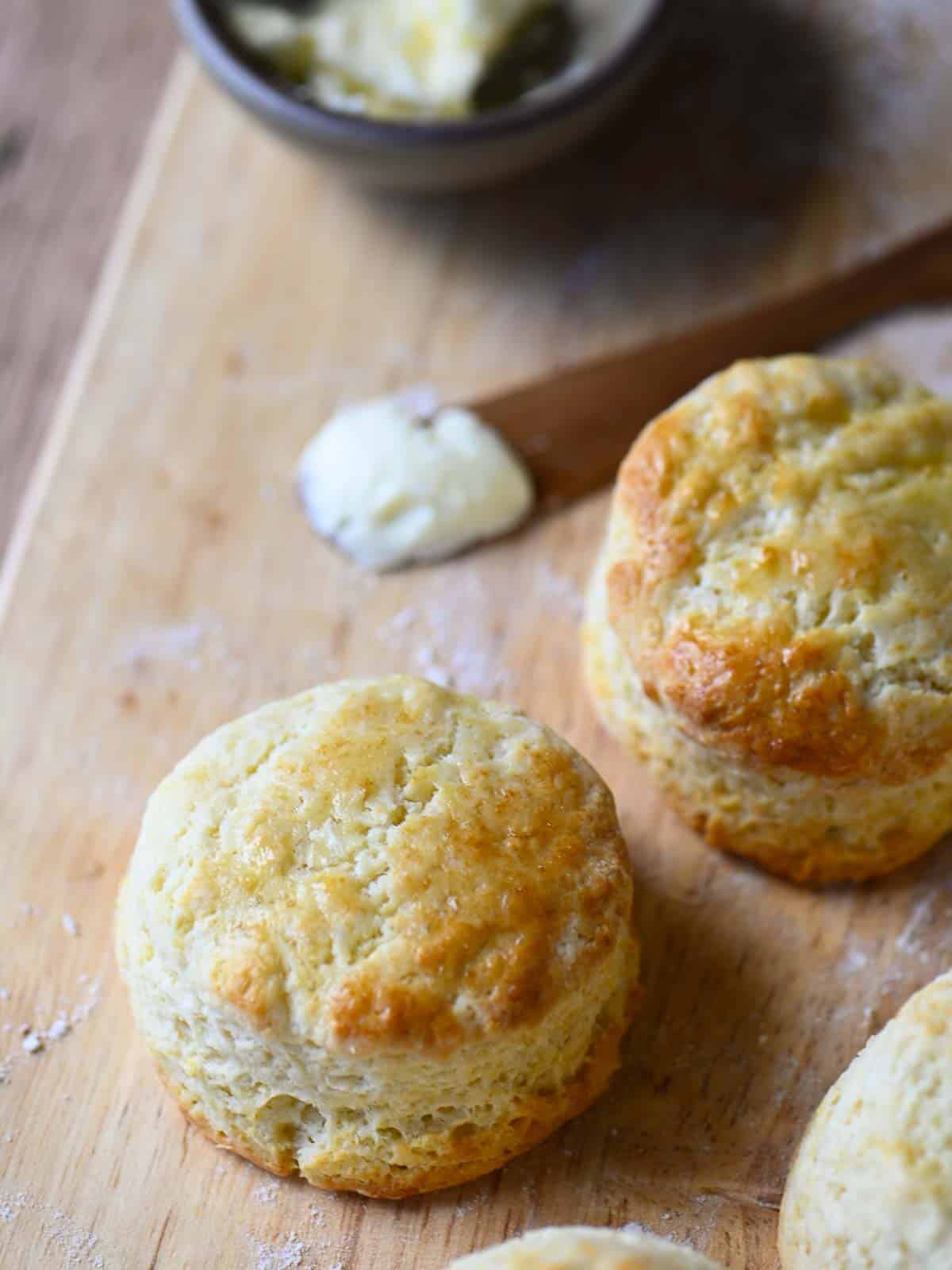
Full ingredient list can be found in the recipe card below.
Step-by-step instructions
Don't let all the steps intimidate you. Biscuits are easy to make. Just don't overwork the dough, and keep everything nice and cold. You got this!
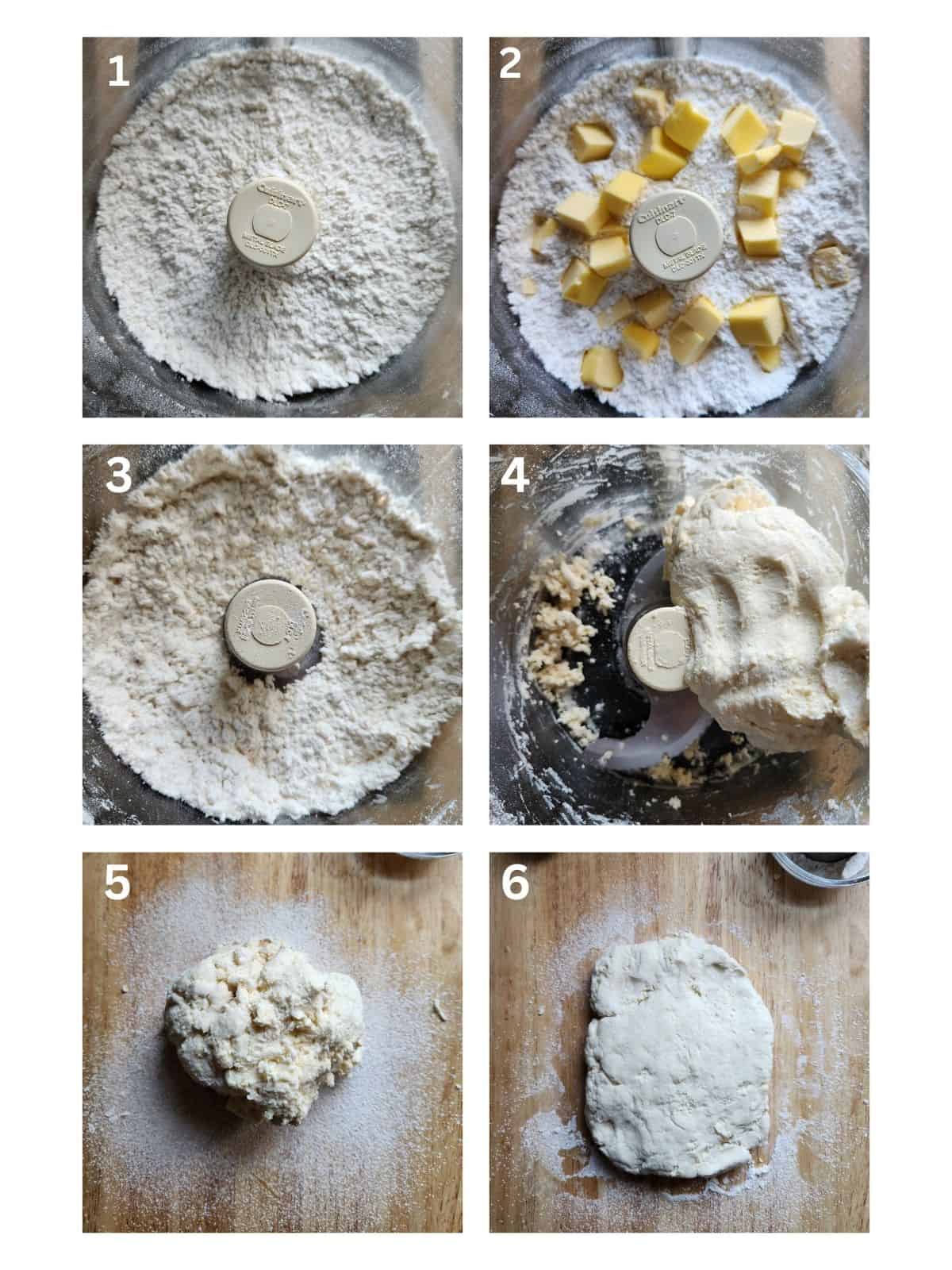
Step 1. Pulse the dry ingredients. Step 2. Add butter. Step 3. Pulse until butter is the size of peas. Step 4. Add buttermilk, and pulse until the dough comes together. Step 5. Gather the dough and turn it onto a floured surface. Step 6. Roll into a rough rectangle.

Step 7. Fold the dough in thirds. Step 8. Fold the other side like a letter. Step 9. Using a biscuit cutter, cut into the dough (no twisting!). Step 10. Refold scraps, and cut- you should have 8 biscuits. Step 11. Chill, then brush with egg wash. Step 12. Bake at 425°F for about 12 minutes.
*These are abbreviated instructions. The full list of directions can be found in the recipe card below.
👩🍳Expert tips
- Use a scale to measure your flour. A scale is ideal for ensuring a perfect dough every time.
- Have all your ingredients ready. Pre-measure your ingredients, and have your baking sheet ready to go. This will help to keep you organized.
- Freeze ingredients while the oven preheats. While the oven is heating, place your cubed butter and buttermilk in the freezer to get a blast of chill. It helps keep the dough tender and prevents the butter from getting too warm while you roll out the dough.
- A food processor is your friend. While you can certainly cut the butter into the flour with your hands or with a pastry cutter, it's easier to use a food processor.
- Chill again. After you cut and roll the biscuits, place them on a baking sheet and chill in the freezer for another 5-10 minutes. This will chill the butter again if it got too warm. Perfect time to do some dishes!
- Wonky biscuits welcome. After cutting the first 6 biscuits, the scraps won't roll as nicely, and you'll get some wonky-looking biscuits. No worries! These are just as delicious. We'll just call them "drop" biscuits.
Variations
Want to switch things up a bit? These simple variations keep the biscuits soft and fluffy while adding a little something extra.
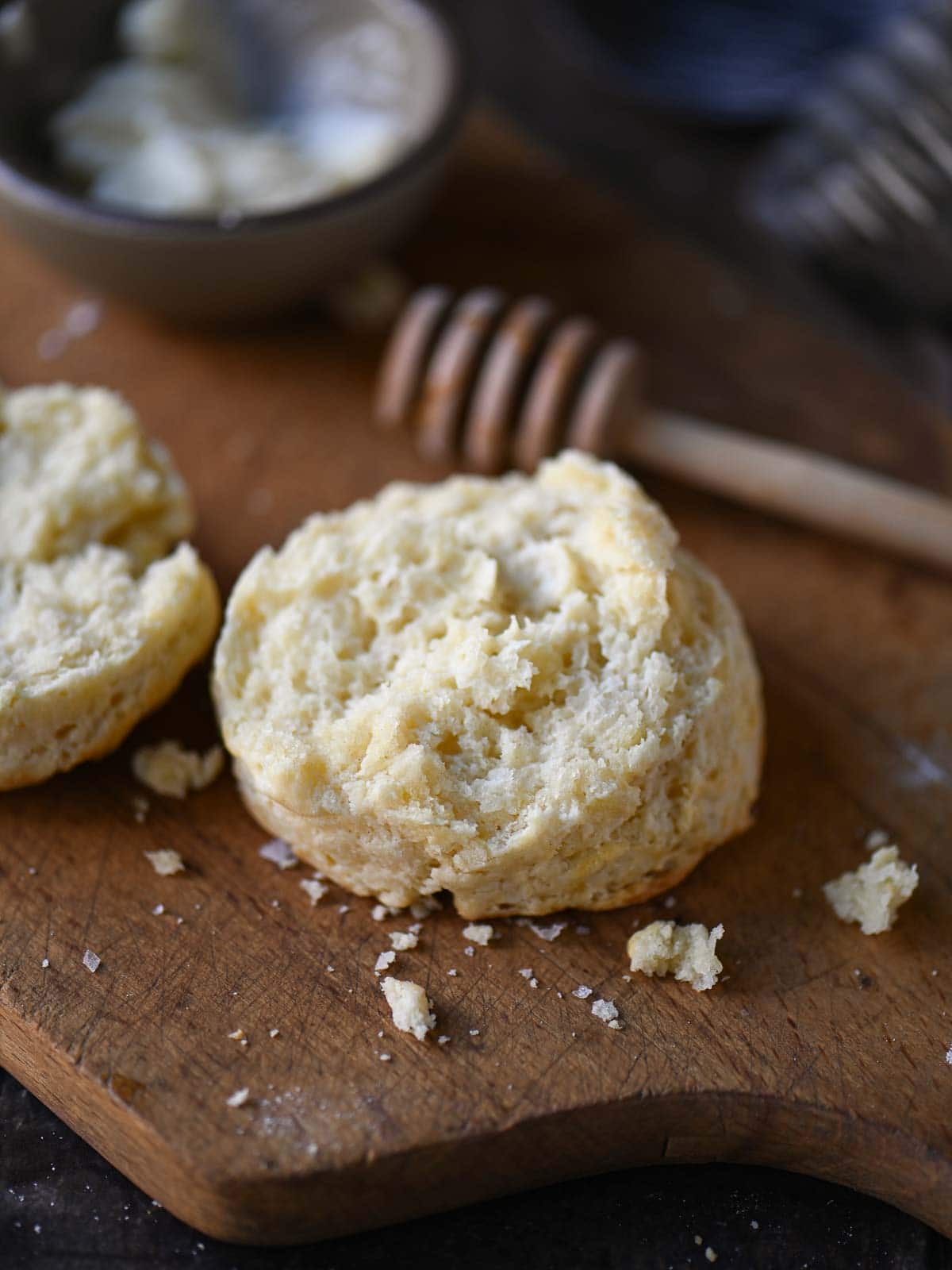
- Honey biscuits. Swap the sugar for honey for a richer, sweeter taste. Whisk into the buttermilk for the best results.
- Cream biscuits. Just like these scones, swap the buttermilk for heavy whipping cream. It'll produce a richer biscuit (just omit the baking soda if doing so).
- Make biscuit breakfast sandwiches. Layer your sandwich with eggs, cheese, and bacon.
- Use biscuits in a dessert. Like in this cranberry shortcake.
- Ditch the biscuit cutter. No cutter? No problem. Just drop the biscuit dough (or scoop it into mounds using a large cookie scoop) onto the baking sheet. They will be more rustic, but it will save you some time.
Serving suggestions
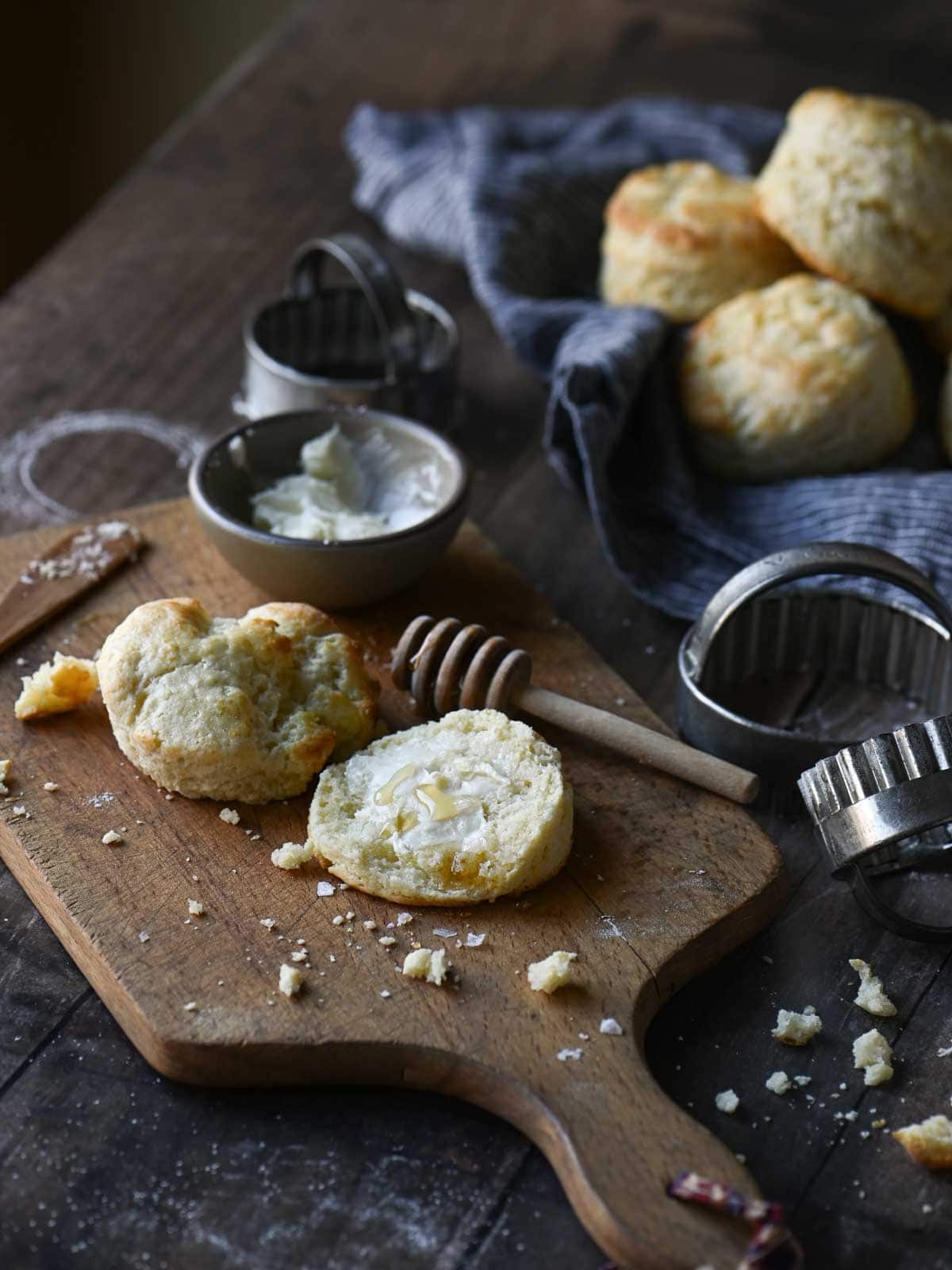
Biscuits are perfect on their own with a pat of softened, salted butter or honey. If you want to get a little fancy, slather on some flavored sweet or savory butter, chocolate tahini spread, bacon chutney, or some delicious fruity jam.
Storage and prep
Once completely cooled, store biscuits in an airtight container at room temperature for up to 2 days.
To freeze, cut the biscuits first, then freeze them solid (don't add the egg wash). When ready to bake, you can place them in the oven straight from frozen (just add 3-5 extra minutes to the bake time).
Frequently asked questions
Because this recipe was specifically tested with cake flour, using all-purpose flour may require adjustments to the liquid and mixing to avoid a tougher texture. If you choose to make the swap, handle the dough very gently and expect a biscuit that's still delicious, but not quite as light and tender as the cake flour version. To substitute all-purpose flour, use 250g all-purpose flour, remove 1 tablespoon, and replace it with 1 tablespoon cornstarch. Results may be slightly less tender than using cake flour.
Perfect pairings
Biscuits are also perfect for dunking!


Made this recipe? I'd love to hear about it. Please leave a ⭐⭐⭐⭐⭐ rating and comment below the recipe. Snapped a photo? Tag @brunchandbatter on Instagram so I can see your creation!
📖Recipe

Cake Flour Biscuits
Equipment
- food processor optional
- 3½ or 4-inch sharp biscuit cutter
- baking sheet
- parchment paper optional
Ingredients
- 2 cups cake flour (not pastry flour, see notes)
- 1 teaspoon Kosher or fine sea salt
- 1½ tablespoon white granulated sugar
- 3 teaspoon baking powder
- ¼ teaspoon baking soda
- ¾ cup cold buttermilk
- ½ cup (8 ounces or 1 stick) cold unsalted butter, cubed
- 1 egg + 1 teaspoon buttermilk for egg wash
Instructions
- Preheat the oven to 425°F. Line a baking sheet with parchment paper and set aside.
- In the bowl of a food processor fitted with the blade attachment, add the flour, salt, sugar, baking powder, and baking soda. Pulse a few times until the mixture is evenly combined. Add the cold, cubed butter and pulse just until the mixture resembles coarse crumbs, with visible pea-sized pieces of butter throughout.2 cups cake flour, 1 tsp Kosher or fine sea salt, 1½ tbsp white granulated sugar, 3 tsp baking powder, ¼ tsp baking soda
- Pour in the buttermilk and pulse until a shaggy dough forms. Turn the dough out onto a well-floured surface and gently knead just until it comes together. Do not overwork the dough.¾ cup cold buttermilk, ½ cup (8 ounces or 1 stick) cold unsalted butter, cubed
- Using your hands, shape the dough into a thick rectangle about ¾ to 1 inch tall. Fold the dough into thirds like a letter, then gently reshape it into a rectangle. Repeat this folding process one more time, then reshape the dough to be ¾ to 1 inch thick.
- Using a floured biscuit cutter, press straight down into the dough without twisting (twisting the cutter will seal the edges, preventing the biscuits from rising), then lift the cutter straight up. The biscuit should release easily. Place the formed biscuits onto the prepared baking sheet. Continue cutting the biscuits until you can no longer get clean cuts, then gently gather the scraps, reshape them into a rectangle, and cut 1-2 more biscuits. You should have about 8 biscuits in total.
- Place the baking sheet in the freezer for 10 minutes to chill. While the biscuits chill, make the egg wash by whisking 1 egg with 1 teaspoon buttermilk. Remove the biscuits from the freezer, brush the tops lightly with the egg wash, and bake for 10-12 minutes at 425℉, or until tall and golden brown on top.1 egg + 1 teaspoon buttermilk for egg wash
- Serve warm with salted butter, honey, or jam.
Notes
- Cake flour works best for these biscuits. Pastry flour has a slightly higher protein content and may result in a less tender texture.
- Freeze ingredients while the oven preheats. While the oven is heating, place your cubed butter and buttermilk in the freezer to get a blast of chill. It helps keep the dough tender and prevents the butter from getting too warm while you roll out the dough.
- Don't have a food processor? No problem. Combine the dry ingredients in a bowl, cut in the butter with a pastry cutter or your fingers, then stir in the buttermilk until a shaggy dough forms.
Nutrition*
*Nutrition information is an estimate and provided as a courtesy. Actual values may vary based on ingredients, measurements, and substitutions.

Sarah says
I made these for Mothers day and served them with honey and strawberry jam. They came out perfect.
Janet Batchelor says
Absolutely loved the texture. The biscuits did not rise as much as I would like so in the future, I will try adding a little more baking powder and or baking soda. I think I finally have begun to discover the secret of how to make a tender biscuit using this recipe..
Jennifer says
Thanks Janet! For extra height next time, try handling the dough as little as possible, and go ahead and cut them a bit thicker. Im so glad you loved the texture🥰