
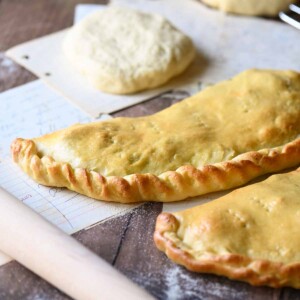
Banada is a traditional Sicilian Stuffed Bread (think of it as a large, rustic cousin to an empanada or calzone). Made with a thin semolina dough and savory fillings, it's baked, sliced, and meant to be shared. Rarely written about and passed down mostly through families, banada is one of those old-world dishes you won't find on menus, but you'll never forget once you've tasted it.
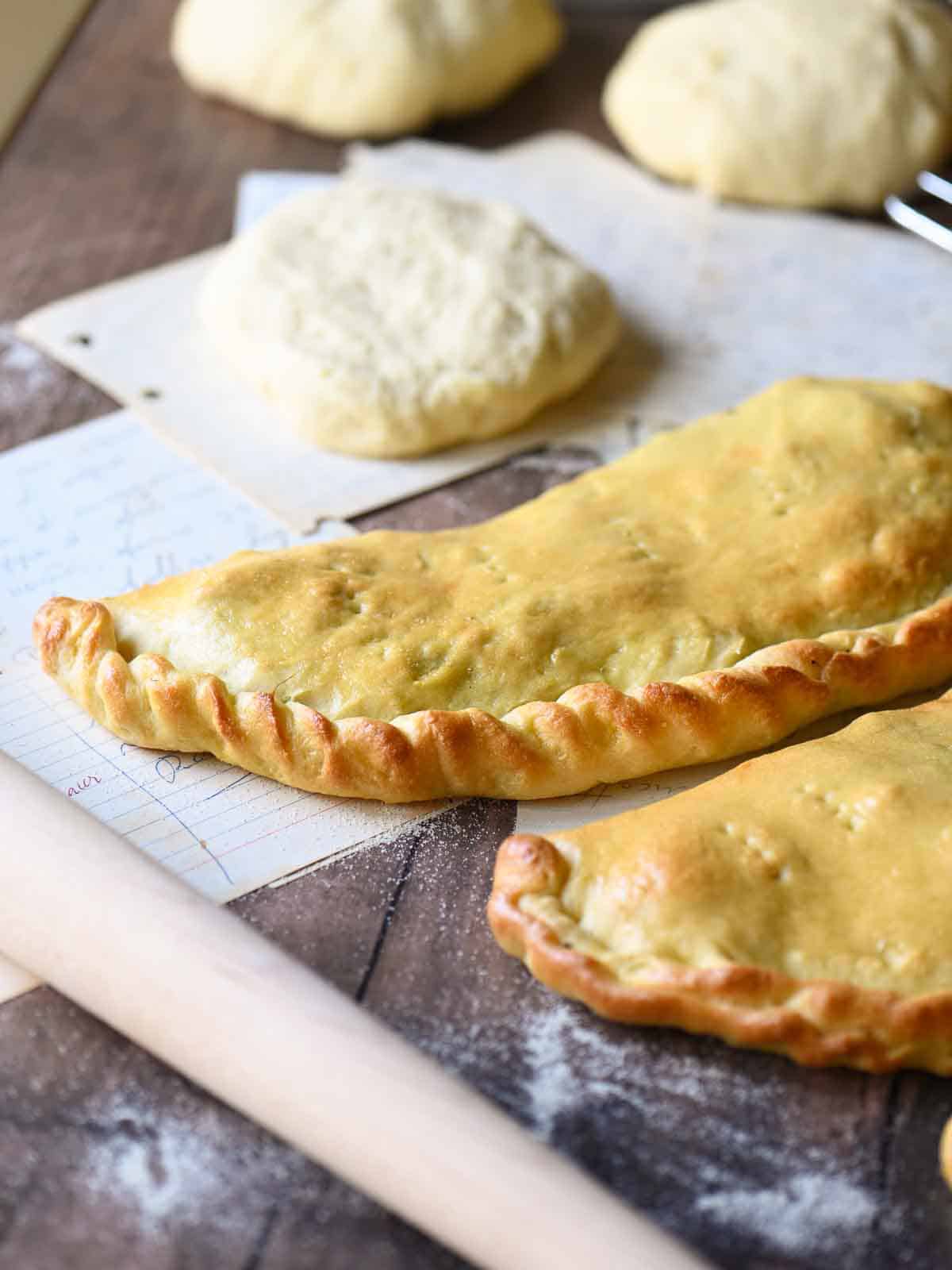
Growing up in a Sicilian-American home, banada wasn't just food; it was a ritual. In our family, "Banada Day" fell a few weeks before Christmas. The rush to find fresh yeast and semolina flour in the stores was no easy feat, but we always managed to come through.
Our family recipe comes from Buccheri, a hilltop town in southeastern Sicily where my grandparents are from. My nonna and her sisters called them "inpanadi" (plural), because they never made just one! Though you won't find banada in many cookbooks or touted by the latest influencer, it lives on in our kitchen and in the hearts of those who grew up making it.
These days, everyone has a role on "Banada Day". My mother prepares the broccoli filling the day before, my uncles secure the fresh yeast and ensure the dough is mixed until it "feels" right, and I'm in charge of reciting the official Banada Day "prayer" (otherwise known as Uncle Tommy's airing of banadas' grievances; Seinfeld fans, anyone?).
Jump to:
Banada's role in Sicilian cuisine
Banada are traditional Sicilian stuffed breads made from a thin, bread-like dough, folded around hearty fillings and baked until golden. Depending on where you are in Sicily, there are a few types of stuffed breads:
- Scaccia. Common in the Ragusa area (near Buccheri's neighbors in southeastern Sicily). Scaccia differs from traditional banada as the dough is typically folded onto itself multiple times, creating a layered effect.
- Scacciata. A variation seen in eastern provinces, such as Catania. Scacciata is typically served as a thin flat pie stuffed with anything from meat, tuma, and vegetables.
- Cudduruni (also written cuḍḍuruni). One well-known version comes from Lentini, in the province of Syracuse, where it's made with semolina dough and filled with black broccoli, onions or wild greens, sheep's milk cheese, and tomato. The dough is folded into a half-moon shape and sealed along the edges before baking. Sounds very similar to our recipe!
- Mpànata / Impanata / Banata. Regional terms stemming from certain Sicilian southeastern towns, such as Castrofillipo and Canicatti, that are tied to the idea of an encased savory pie, with a name linguistically linked to the Spanish empanada.
After taking a deeper dive and scouring the internet for any information on banada, I've concluded that my family's recipe most closely resembles that of Sicilian Impanata/Banata and Cudduruni, particularly because of the way the breads are shaped and the incorporation of semolina flour in the dough.
Banada fillings
Banada is the epitome of rustic cuisine, with a filling traditionally consisting of the leftovers from the previous meal. As recipes evolved, fillings included anything from ground beef, sausage, spinach, cauliflower, onions, eggs, olives, potatoes, sun-dried tomatoes, and regional cheeses. I can guarantee you that no two family recipes are alike.
Our family made two main types of banada fillings: broccoli and spinach (or Swiss Chard). Over the years, our family dropped the spinach version as it became harder and harder to find fresh spinach around the holiday season, and ultimately, it was more time-consuming to clean and cook (if you know, you know).
Whether we were making spinach or broccoli, the supporting ingredients were always the same: sun-dried tomatoes, onions, garlic, cured black olives, crushed red pepper, and grated Parmesan or Pecorino Romano cheese. The filling was so good I could easily eat it on its own or mixed into pasta when we had leftovers!
Instant Yeast versus Fresh Yeast
Our original banada recipe called for fresh yeast because that's what was available when my family first came to the United States. The problem? Fresh yeast is almost impossible to find. My local supermarket occasionally stocks it right before Christmas, but the price is always a little outrageous, and it spoils quickly!
So enter me, the one family member trying to preserve this recipe. It's 2026, and I want to be able to make banada whenever I feel like it. I set out to convert the fresh yeast to instant yeast, an old, reliable friend that has never let me down. As a bonus, instant (or quick-rise) yeast doesn't need to be bloomed and can go straight in with the dry ingredients.
The hardest part of my quest was deciphering what was written down as a "piece-a" yeast (read that in broken English). For anyone unfamiliar with Italglish, that translates to "a piece of yeast." Okay, but what the heck is a piece of yeast? Over the years, I watched, measured, and weighed the fresh yeast on "Banada Day". I eventually landed on 0.5 ounces of fresh yeast per kilogram of semolina flour as the sweet spot. That gave me a starting point for converting the family recipe to instant yeast. I think I deserve the Nobel Yeast Prize for that, honestly.
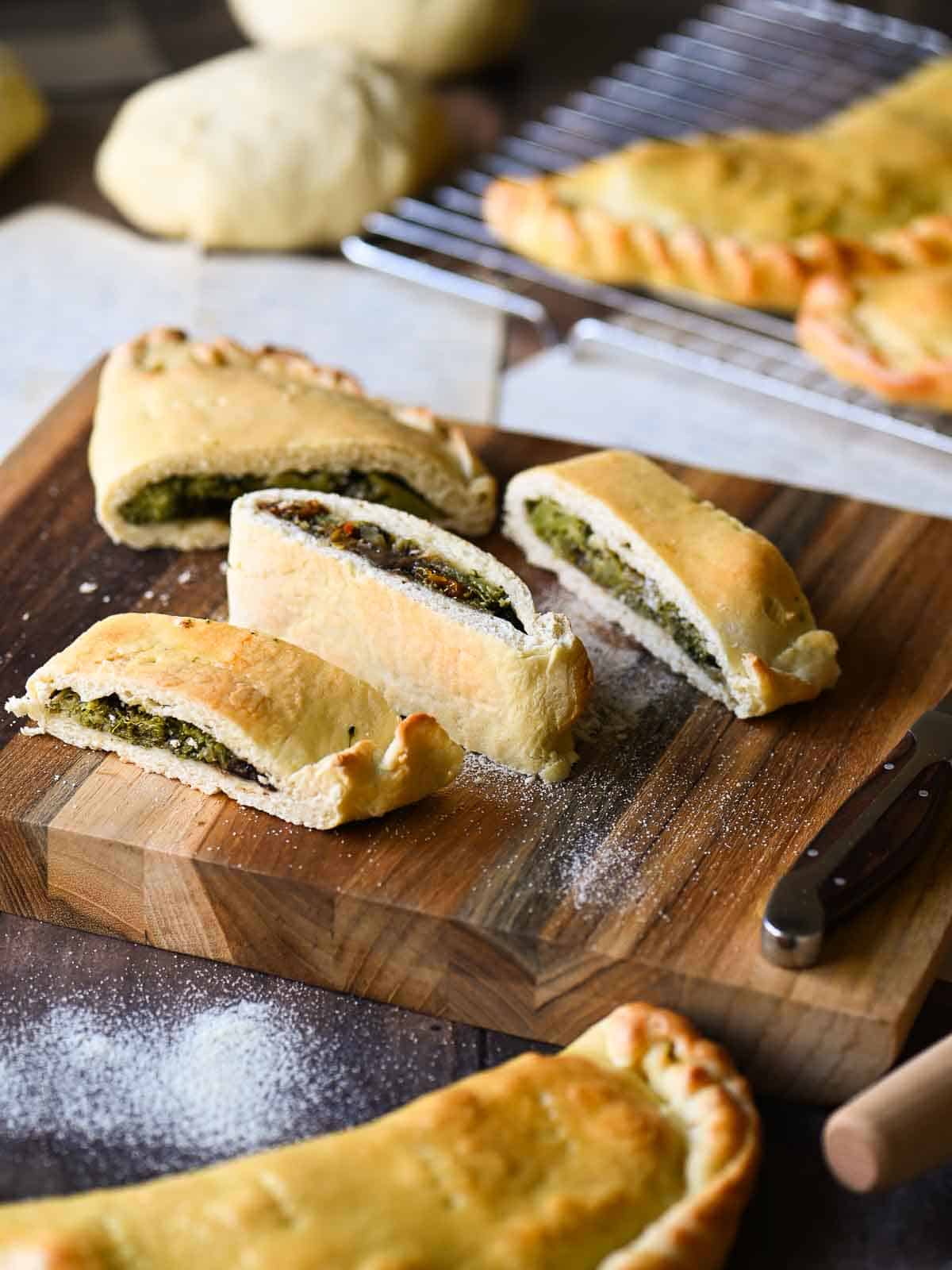
A word about semolina flour
To make banada, you'll want to get your hands on double-milled semolina flour. Double-milled semolina has a much finer, flour-like consistency, leading to a dough that rolls beautifully while still holding its shape when baked.
I've tested this recipe with two common semolina flours, Bob's Red Mill Semolina Flour (not double-milled) and Caputo Semola / Semola Rimacinata di Grano Duro, which is double-milled. The banadas made with Bob's Red Mill were a little harder to roll, while the Caputo Semola produced a more elastic dough.
Step-by-step instructions
Banada are not difficult to make, but they do require some prep, and the dough needs to rest after kneading, so plan accordingly. You can prepare your filling the day before to save time, leaving you less rushed when making the dough.
Preparing the broccoli filling and the dough
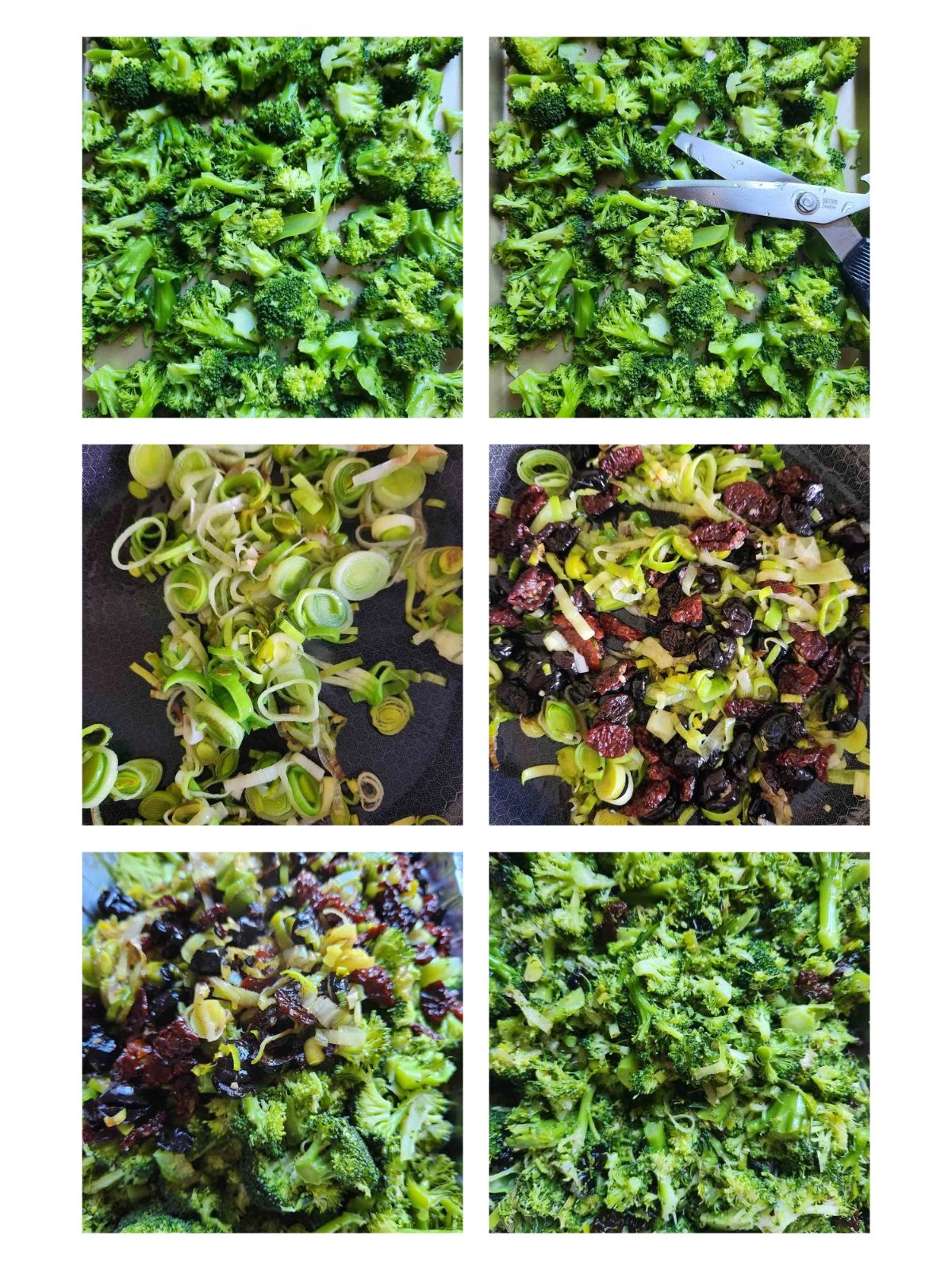
Step 1. Steam the broccoli and mix with the sautéed onions, garlic, sun-dried tomatoes, and olives. Set aside.
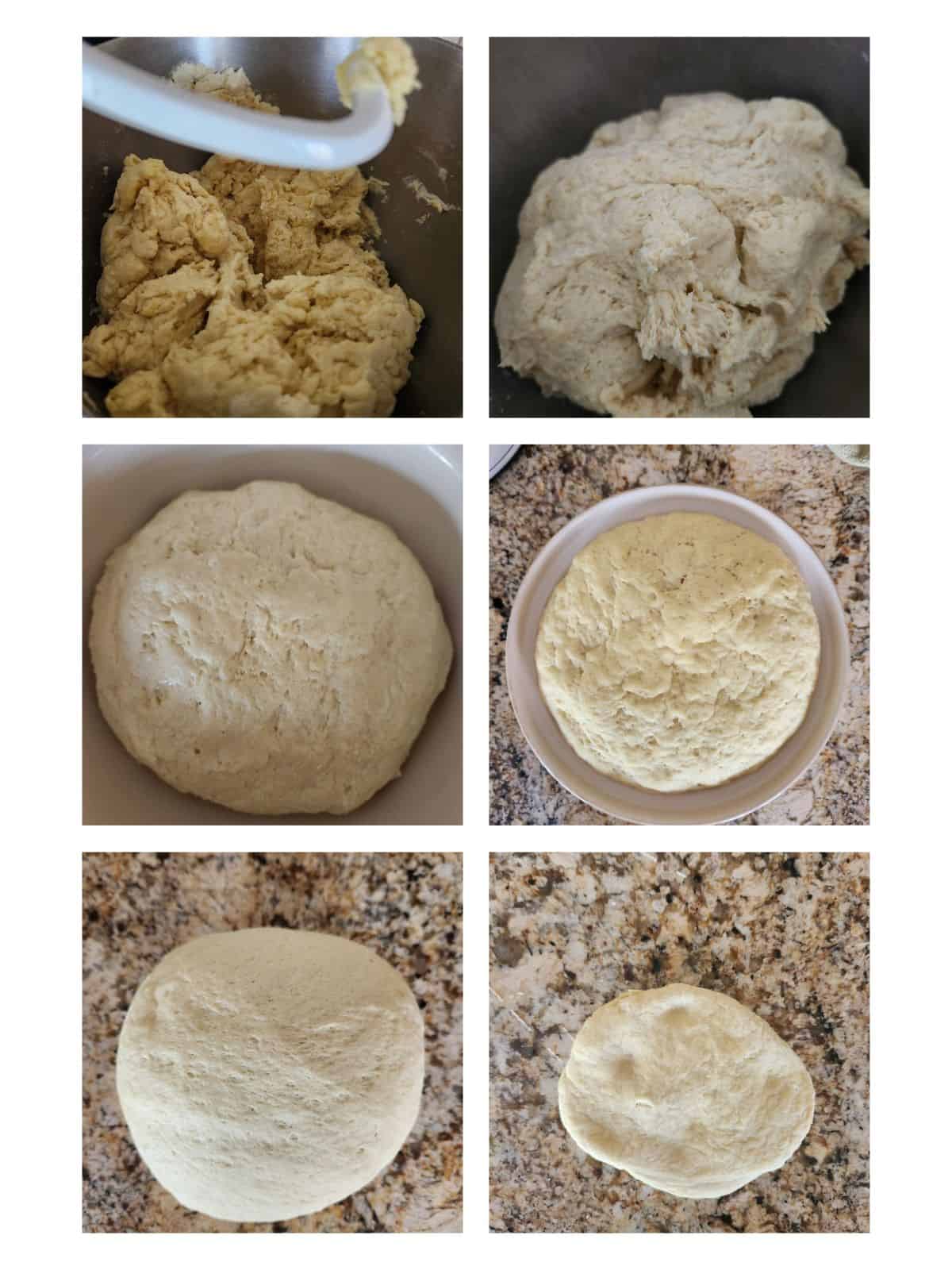
Step 2. Prepare the dough and let it rise in a warm spot for about an hour, until puffy. Divide the dough into 8 portions.
Rolling, stuffing, and baking banada
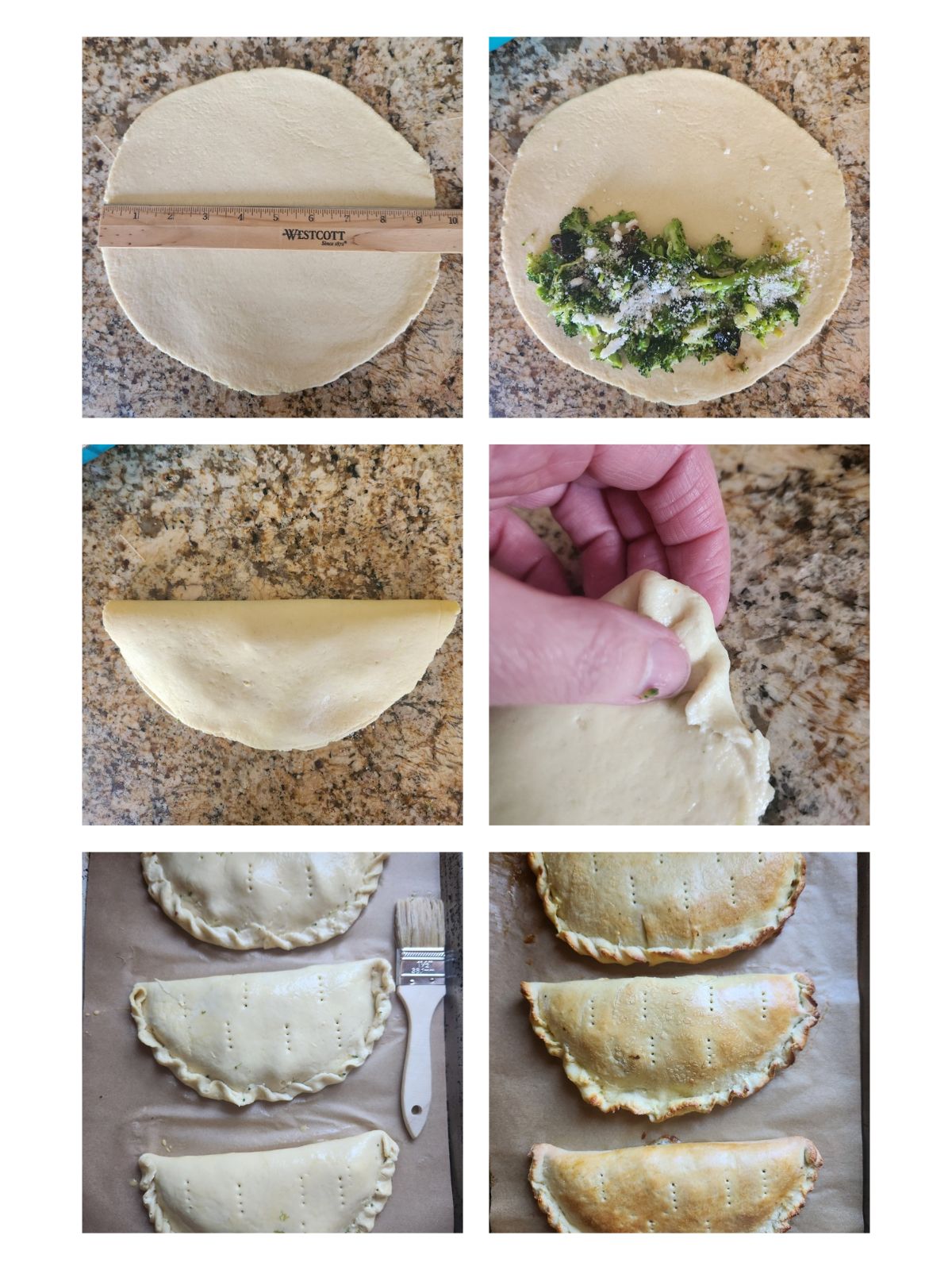
Step 3. Roll the dough into circles, add the broccoli, then top with grated cheese. Fold over and seal/crimp the dough. Egg-wash, then poke holes. Bake at 450°F for 20-25 minutes, until golden brown.
*These are abbreviated instructions. The full list of directions is in the recipe card below.
👩🍳Expert tips
- Prep the filling the day before. Make the filling the night before so it's ready to go as you stuff the breads. The longer the filling sits, the more flavor anyway.
- Rest the dough. The dough needs time to rise, so plan accordingly.
- Get the family involved. Like many Italian recipes, especially traditional ones, enlisting loved ones helps make the process a lot easier.
Variations
You can use any variety of fillings you would like; there are no rules! You can also make them bigger or smaller, especially if you want to make it a handheld pie. If you wanted to shape them differently, you could roll the dough instead of folding it.
Serving suggestions
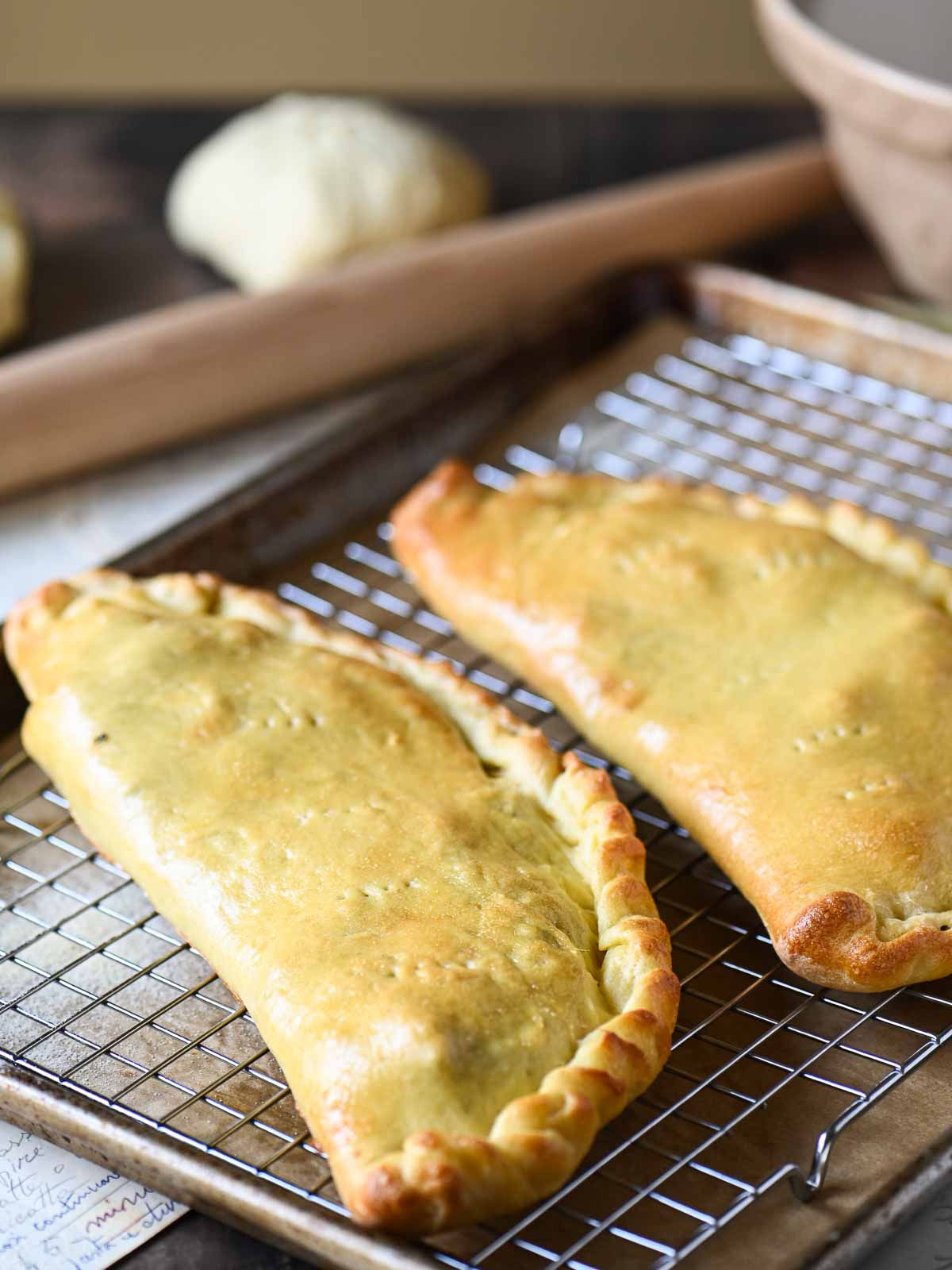
In our family, banada was served either warm or at room temperature. We cut each banada into single, easy-to-hold slices and served them as an appetizer on Christmas or Easter.
Banada almost always came with a side of prepared Italian hot peppers. It was the bread you grabbed between bites to tame the heat of the peppers (a tradition I never quite embraced). So if you feel like going full Sicilian, consider yourself warned!
Storage and prep
Store cooked and cooled banada in the fridge for up to 5 days. Cooked and cooled banada can be wrapped and stored in the freezer for up to 3 months. When ready to reheat, thaw and place in a 350°F oven until warmed through.
Frequently asked questions
While banada no doubt shares its DNA with a calzone, they are entirely different stuffed breads. Calzones typically use a pizza dough, while banada uses a semolina dough. Calzones are shaped and folded like a banada, but their fillings usually consist of softer cheeses and are paired with tomato-based sauces for dipping.
More Italian favorites
Want more Italian recipes? Browse our Italian Brunch category for these and a whole lot more!


Made this recipe? I'd love to hear about it. Please leave a ⭐⭐⭐⭐⭐ rating and comment below the recipe. Snapped a photo? Tag @brunchandbatter on Instagram so I can see your creation!
📖Recipe
Banada (Sicilian Stuffed Bread)
Equipment
- kitchen scale
- kitchen thermometer
- stand mixer fitted with the dough hook attachment
- rolling pin
- large baking sheets
- parchment paper or silicone baking mats
Ingredients
Broccoli Filling
- 2 lbs broccoli crowns (about 2 large heads)
- 2-3 tablespoon extra-virgin olive oil
- 2 medium leeks or onions, sliced thin
- 3 cloves garlic, minced
- 1 cup cured black olives, pitted and chopped
- 1 cup sun-dried tomatoes, roughly chopped
- 1 teaspoon kosher salt, plus more to taste
- ½ teaspoon crushed red pepper
Semolina Dough
- 1 kg (2.2 lbs) double-milled semolina flour
- 2½ cups warm water (105-115℉)
- 1 packet instant yeast (7 g or 2¼ teaspoons) also known as quick rise yeast
- 1 tablespoon fine sea salt
- 2 tablespoon extra-virgin olive oil
- 2 tablespoon dry white wine
Preparing the Banada
- broccoli filling (prepared separately, see below)
- ½ cup grated Parmesan cheese for topping
- 1 egg beaten, for egg wash
- flour, for rolling
Instructions
Broccoli Filling
- Cut the florets from the broccoli, separating any large florets into smaller pieces. Leave the smaller stems attached. Steam the broccoli until bright green and just fork-tender. It will continue cooking inside the banada, so be careful not to overcook it or let it become mushy.2 lbs broccoli crowns (about 2 large heads)
- Transfer the steamed broccoli to a large pan or bowl. While it's still warm, use kitchen shears to cut the florets into bite-sized pieces. Keep the pieces fairly rustic and uneven rather than chopping them too finely. Set aside to cool slightly.
- Heat the olive oil in a large skillet over medium heat. Add the leeks or onions and cook until softened, about 5 minutes. Stir in the garlic and cook for about 30 seconds, just until fragrant.2-3 tbsp extra-virgin olive oil, 2 medium leeks or onions, sliced thin, 3 cloves garlic, minced
- Stir in the olives and sun-dried tomatoes, along with a little more oil. Season with salt and crushed red pepper. Cook just long enough for the flavors to come together (1-2 minutes, adding more oil if needed).1 cup cured black olives, pitted and chopped, 1 cup sun-dried tomatoes, roughly chopped, 1 tsp kosher salt, plus more to taste, ½ tsp crushed red pepper
- Add the olive and tomato mixture to the broccoli and toss gently until everything is evenly distributed. Taste and adjust the salt, crushed red pepper, and oil as needed. The filling should be well-seasoned, since it will be wrapped in the semolina dough.
- Let the broccoli mixture cool completely before stuffing the Banadas. Set aside until ready to use.
Semolina Dough
- Add the semolina flour, instant yeast, and salt to the bowl of a stand mixer fitted with the dough hook. Add the warm water and olive oil. Mix on low speed until a rough dough forms. Gradually add the white wine, mixing until incorporated. Do this in batches for easier mixing.1 kg (2.2 lbs) double-milled semolina flour, 2½ cups warm water (105-115℉), 1 packet instant yeast (7 g or 2¼ teaspoons), 1 tbsp fine sea salt, 2 tbsp extra-virgin olive oil, 2 tbsp dry white wine
- Continue to mix on low/stir until the dough becomes more cohesive, smooth, and pliable (about 2-3 minutes). It will be slightly sticky, warm, and soft.
- Remove the dough from the mixer and gently knead it a few times until you have a round, smooth ball. Transfer the dough to a lightly oiled bowl, cover, and let it rise in a warm place for about 1 hour, or until noticeably puffy.
- Turn the dough onto a lightly floured surface and divide into 8 equal portions, approximately 7 ounces each (they don't have to be perfect). Shape into balls, cover, and let rest for a few minutes before rolling.flour, for rolling
- Working with one portion at a time, roll each ball into a circle approximately 9½ inches in diameter. Keep the remaining dough covered while you work.
For Filling and Baking the Banada
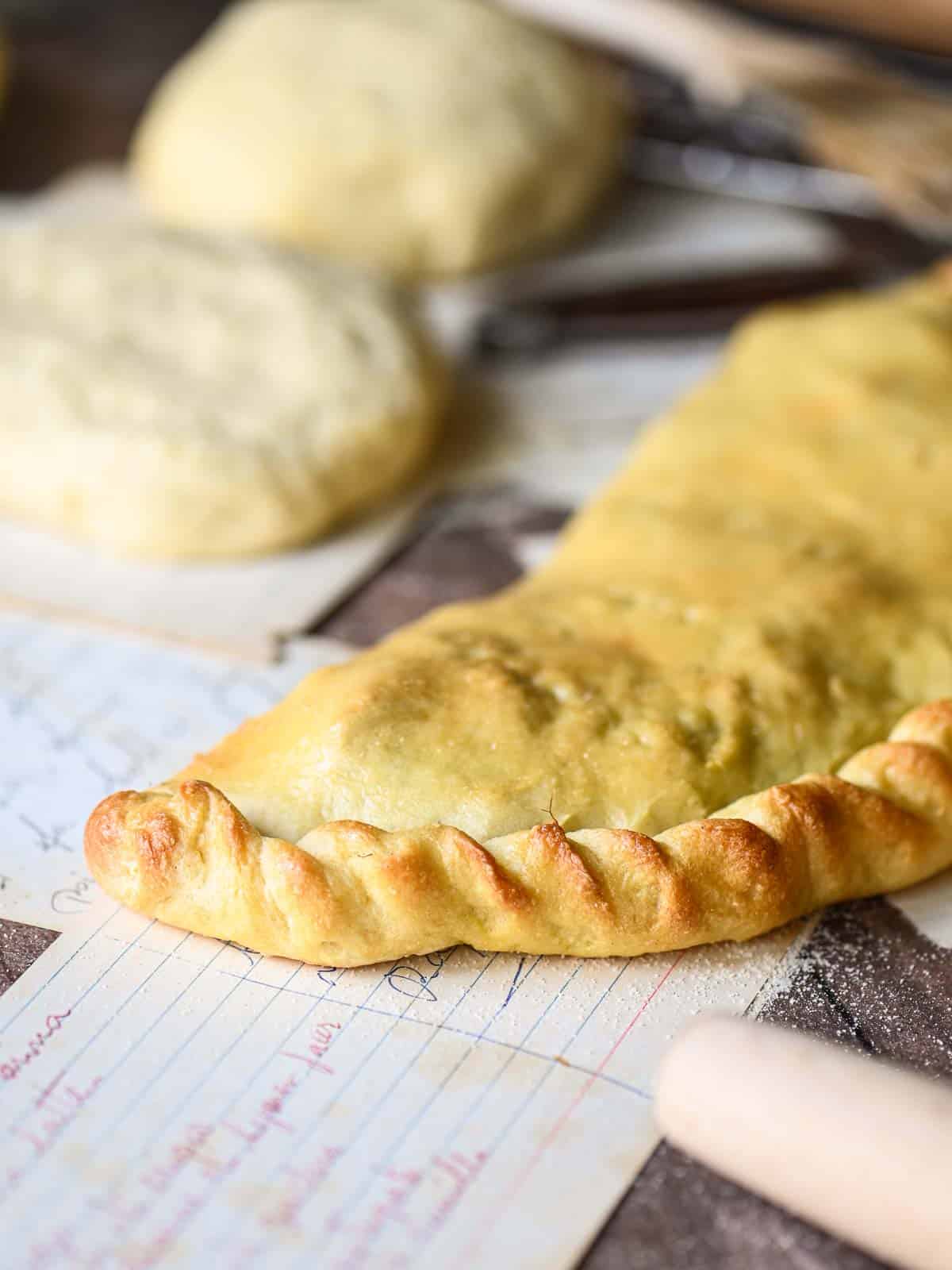
- Spoon the cooled broccoli filling onto one half of each dough circle, leaving a border around the edges. Top with grated Parmesan cheese. Fold the other half over the filling to create a half-moon shape. Press the edges together to seal, then twist and roll the border into a rope-like edge, working in small sections around the curve.broccoli filling, ½ cup grated Parmesan cheese for topping
- Arrange the banadas on parchment-lined baking sheets. Brush the tops with beaten egg, then use a fork or the tip of a knife to poke a few small holes in the top of each one to allow steam to escape.1 egg beaten, for egg wash
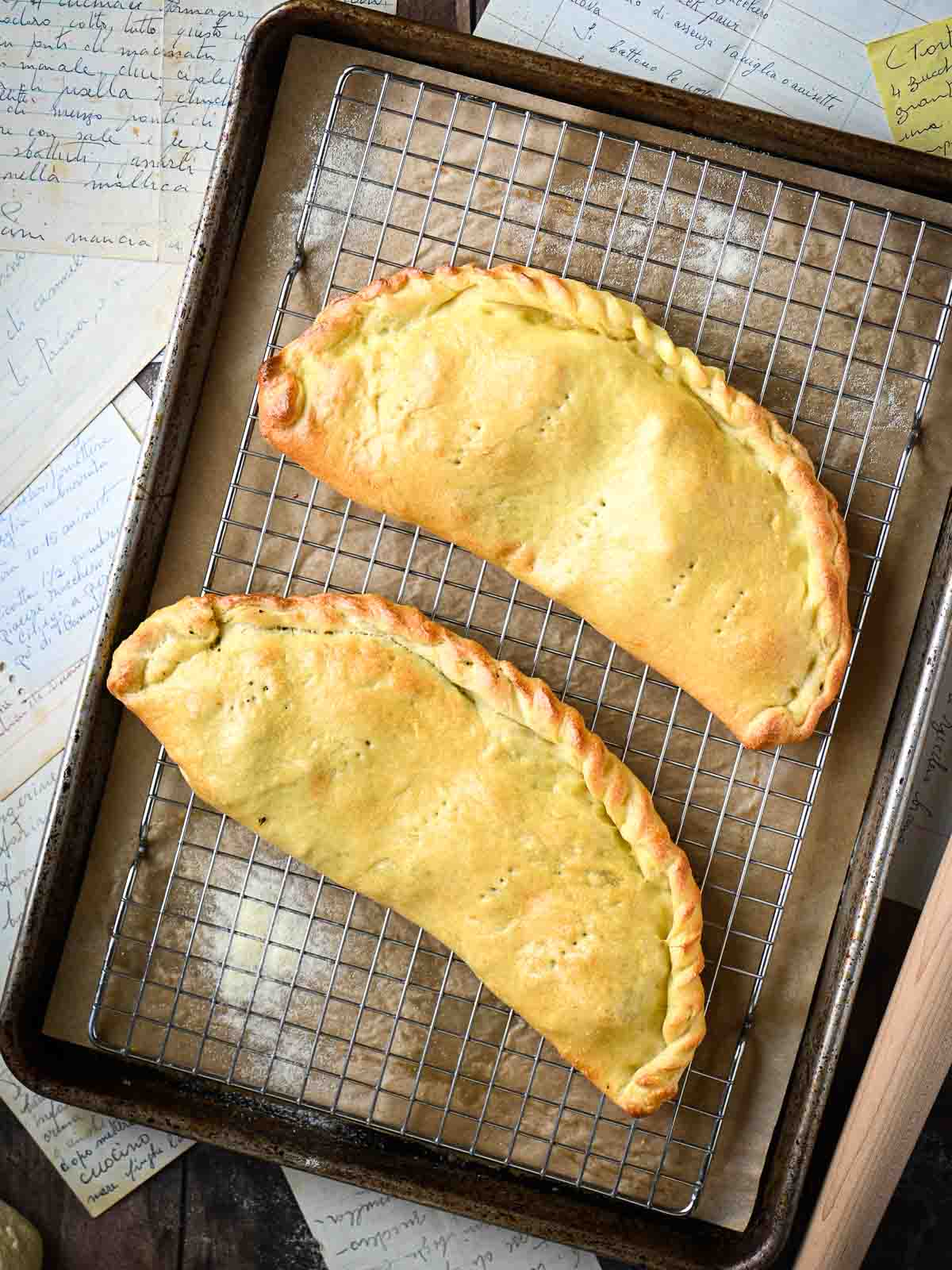
- Bake at 450°F for approximately 18 minutes, or until the dough is golden brown. Baking time may vary depending on your oven and the size of your banadas. Remove from the oven and let them cool on a wire rack. Serve warm or at room temperature, or freeze.
Notes
- Store cooled banada at room temperature in the fridge for up to 5 days, or freeze for up to 3 months.
Nutrition*
*Nutrition information is an estimate and provided as a courtesy. Actual values may vary based on ingredients, measurements, and substitutions.


Brunch success? Share a ⭐ rating and comment below.